
EC Raman
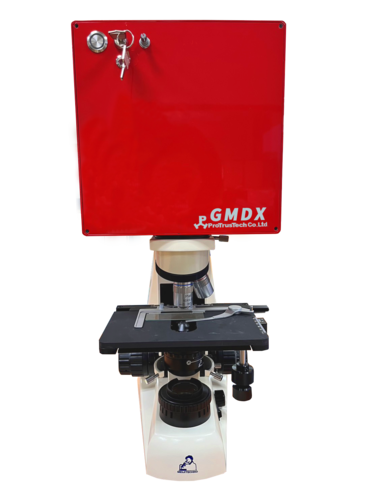
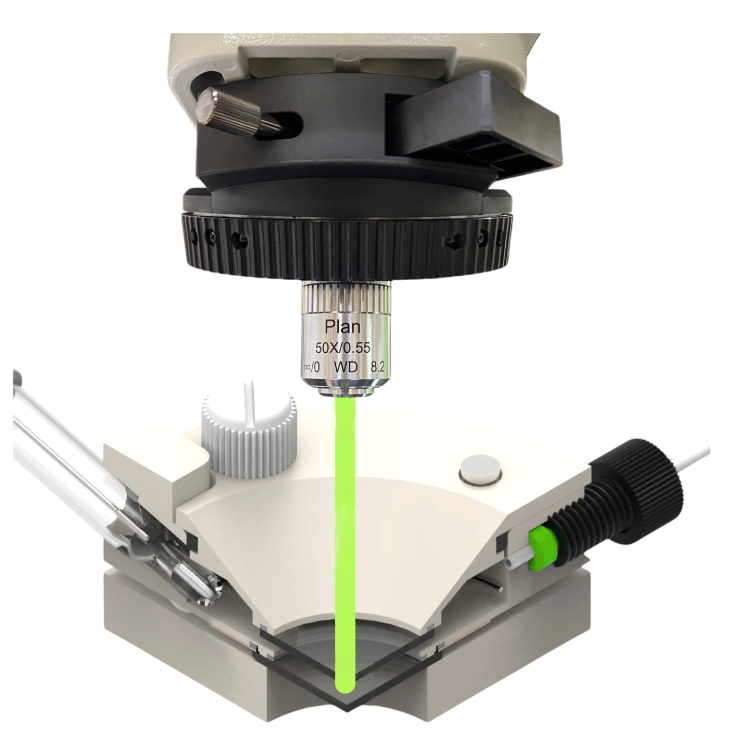
Electrochemistry and Raman spectroscopy can provide more detailed information about electrode reactions. We call this two-in-one system “Combined EC-Raman”. Combined EC-Raman can perform in-situ measurements and simultaneously monitor and record to track structural changes and identification of adsorbed species or intermediates.
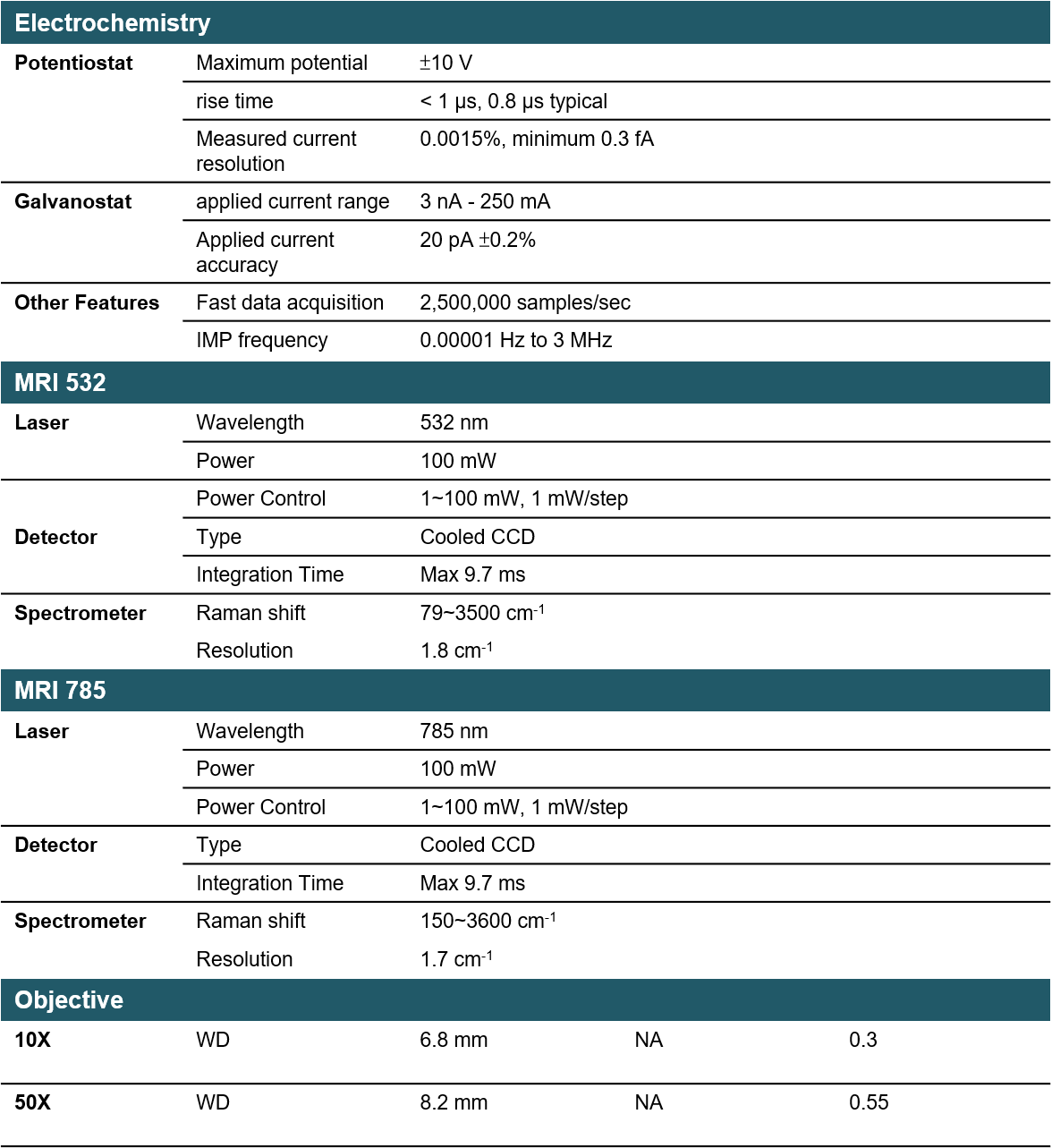
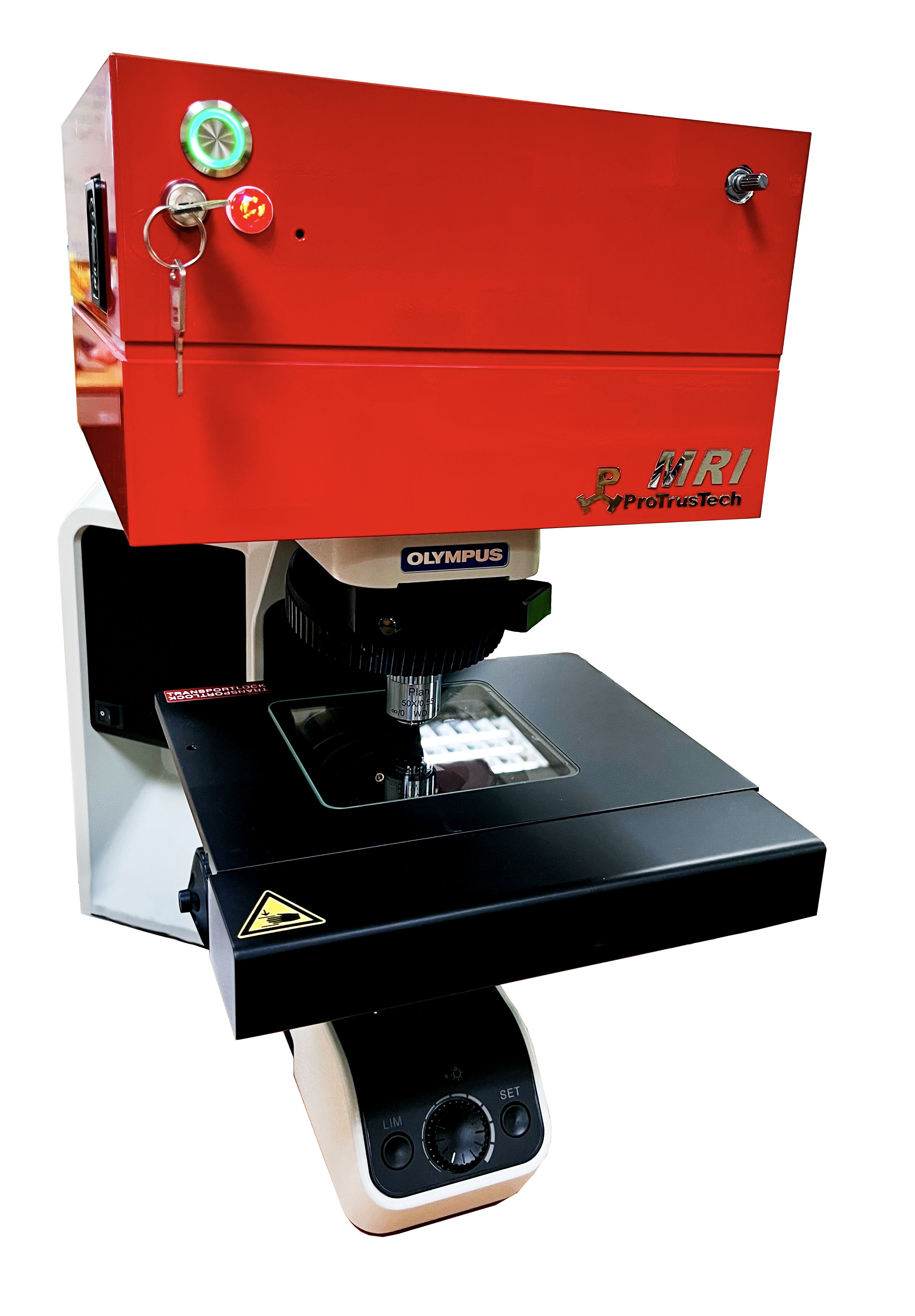
We have integrated the CHI brand electrochemical platform and the PTT MRI micro-Raman spectrometer, and can set Raman with different laser wavelengths according to different electrolytes, or can automatically switch the laser light source at two different wavelengths of 532 and 785nm, and obtain two Raman spectra at different wavelengths after the experiment.
The design of Combined EC-Raman can provide richer and real-time information, which is a great tool for electrochemical researchers.
(Taiwan and US patents: I 750718, US 11,340,114 B2)
PTT
MRI Raman is designed and manufactured in Taiwan; it offers fully customizable
laser wavelengths and spectral ranges so as on to meet diverse experimental
requirements.
- Very Suitable for applications of thin films, trace samples, and SERS substrates
- Monolithic optical box design for optical stability
- Direct laser output with non-fiber configuration for no losing energy transmission
-XYZ motorized sample stage, 5MP CCD camera and automated image and scan switching via software
- 10X objective, customers can change different magnifications of objectives by themselves
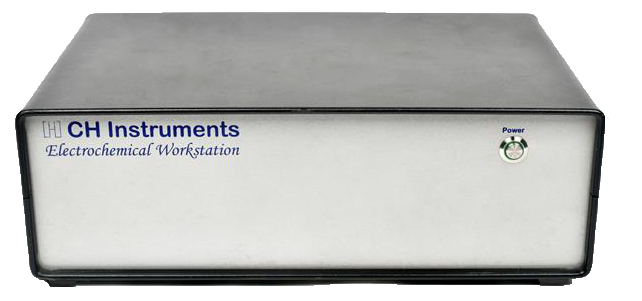
High-Resolution Voltage and Current Control
- Voltage resolution up to ~30 µV
- Current resolution up to ~1 pA (depending on model)
- Wide current detection ranges from picoamperes (pA) to milliamperes (mA)
High Scan Rate Support
- Scan rate range: 0.001 V/s to 10,000 V/s
- Focus on analyzing transient electrochemical behavior
Multiple techniques integrate into one system
- Supports dual working electrodes (bipotentiostat) function
- Could expand features and current range, having customization to meet customer’s needs
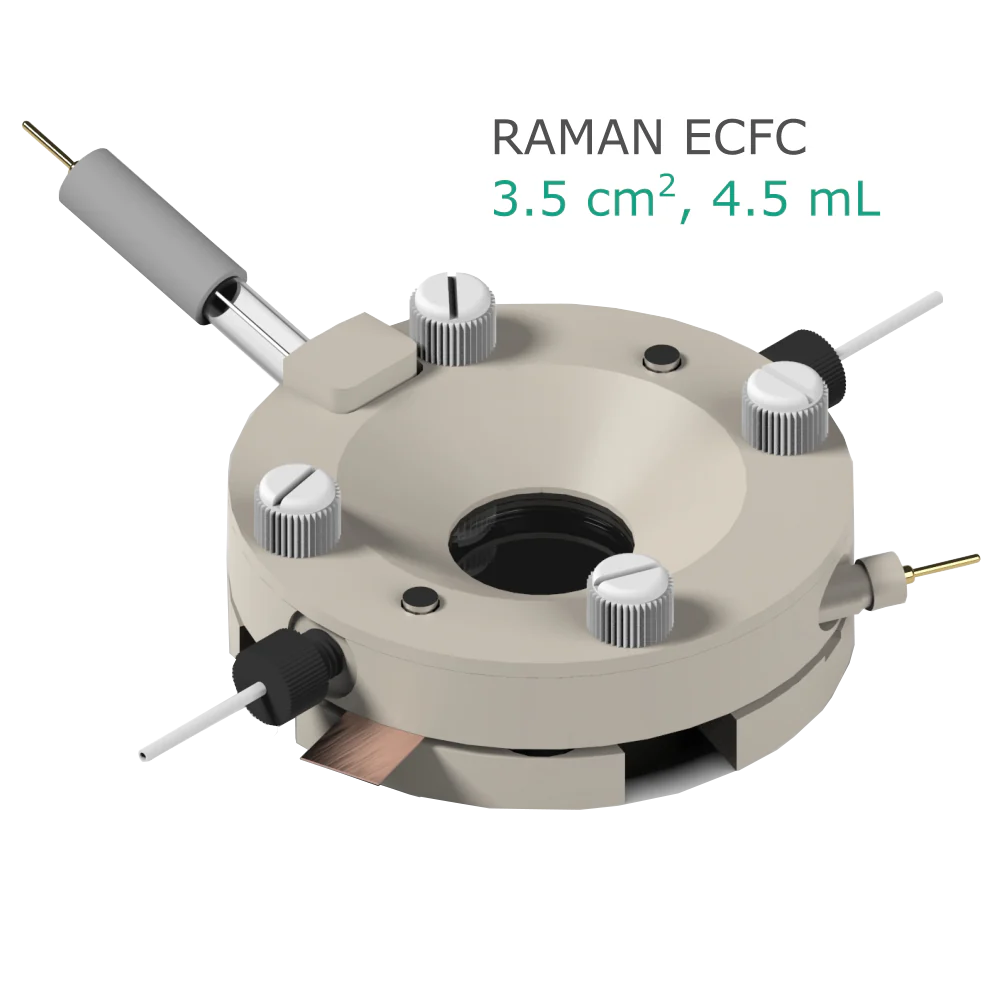
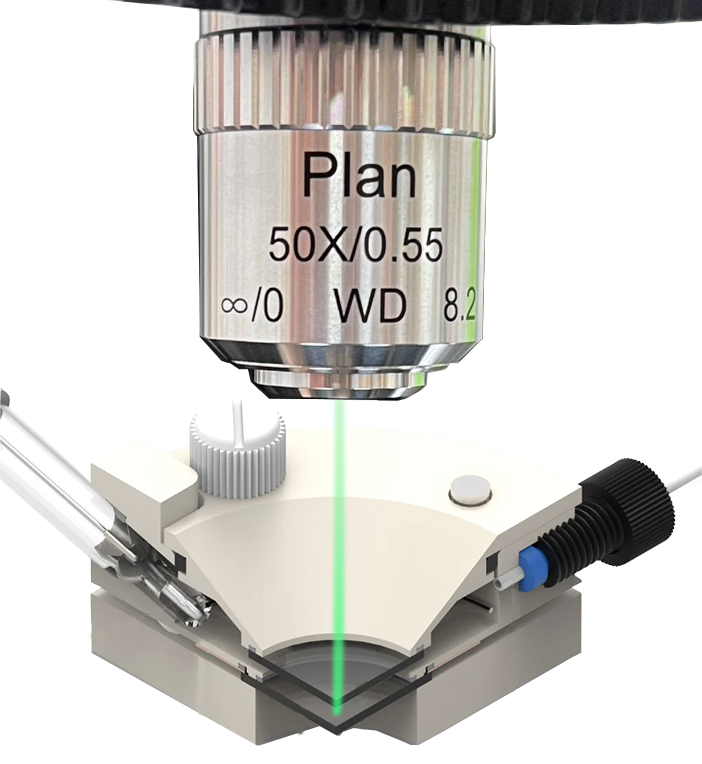
Flow-Through Electrochemical Cell for In-Situ Raman design
* Flow-through design ensures stable electrolyte flow and stay away from bubble interference
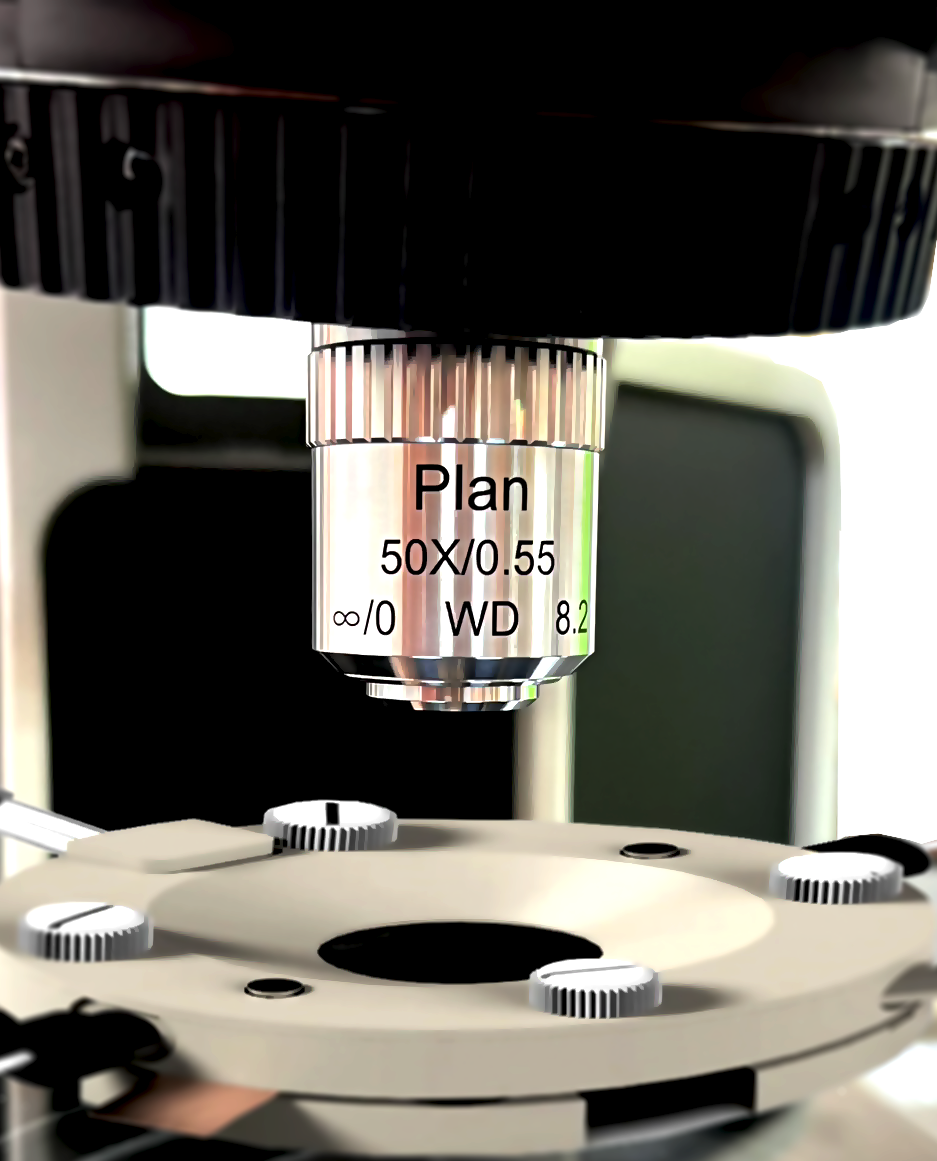
* Suit to go with Raman microscope objectives for simple and stable optical alignment
* Highly modular design for easy assembly, maintenance
* Support a variety of electrode materials and sizes
*
Working electrodes could be
replaceable by ourselves, including glassy carbon, gold, platinum, nickel foam,
and more
* Laser
focal point precisely aligned with electrode surface and observation
window
* Chemically
resistant materials s (PEEK, Teflon, quartz)
* Flow channels and cell body designed with strong acid/alkali resistance (PEEK、Teflon)
* Easily expandable for SERS, IR, AFM, and so on
Application
● Organic compounds: Molecular catalysts, adsorbed species, reaction intermediates
Inorganic materials: Metal oxides, carbon-based materials (e.g., graphene, nanotubes), transition metal dichalcogenides
● Operando observation of NiFe catalysts during oxygen evolution reaction (OER)
● Selectivity control in glycerol electro-oxidation
● Phase transitions and functional group conversion on metal oxide surfaces
● Energy materials development
● Monitoring corrosion processes and protective film formation